

How To Manage Audio Devices In Windows 10
If yous're having audio or audio problems, the following suggestions might assist. The tips are listed in club, so beginning with the first ane, see if that helps, and then continue to the next one if it doesn't.
Before you lot begin
Start past running the automated audio troubleshooter in the Become Help app. Get Help automatically runs diagnostics and takes the correct steps to fix most sound issues.
Open Get Assist
If the Get Help app is unable to resolve your audio or audio issue, try the possible solutions listed:
If multiple audio output devices are available, check that you have the appropriate one selected. Here's how:
-
Select the Speakers icon on the taskbar.
Note:If you don't see Speakers displayed, information technology may be in the overflow area. Select Prove hidden icons to bank check there.
-
Next, select the arrow to open a list of audio devices connected to your computer.
-
Check that your audio is playing to the audio device you adopt, such as a speaker or headphones.
If this doesn't help, continue to the next tip.
The audio troubleshooter might be able to fix audio problems automatically.
To run the troubleshooter:
-
Go to Search in the taskbar, type audio troubleshooter, and select Observe and fix problems with playing sound from the results to launch the troubleshooter.
-
Select Adjacent, and then select the device you want to troubleshoot so continue through the troubleshooter.
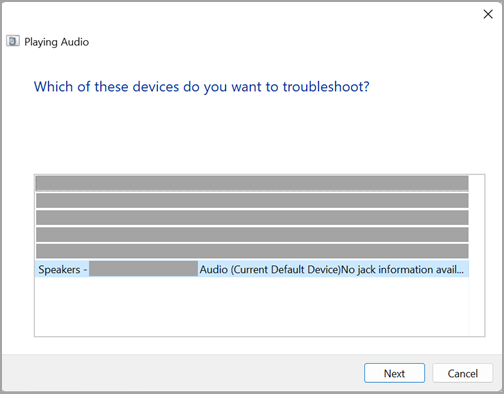
You tin can likewise launch the troubleshooter from audio Settings:
-
Select Kickoff > Settings > Organisation > Audio > Troubleshoot common sound issues and select Output devices or Input devices.
If running the troubleshooter doesn't help, continue to the side by side tip.
To bank check for updates:
-
Do one of the following:
-
If the status says, "You lot're up to date," get to the next tip.
-
If the status says, "Updates are available," select Install at present.
-
-
Select the updates y'all want to install, then select Install.
-
Restart your PC and check if your sound is working properly.
If that didn't solve your trouble, go on to the next tip.
Try these steps:
-
Check your speaker and headphone connections for loose cords or cables. Brand certain all cords and cables are plugged in.
-
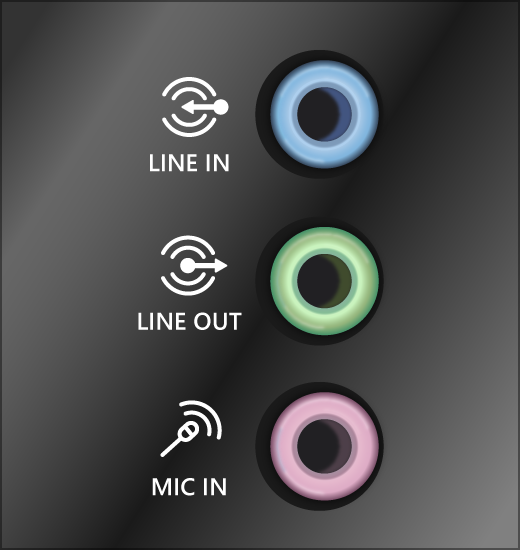
If y'all have multiple 5mm jacks to plug into, especially on a environment sound system, make sure all cords and cables are plugged into the correct jack.
-
If information technology's not clear which jack goes with which cord, consult your hardware manufacturer, or try the about obvious outputs ane at a fourth dimension and see if they piece of work.
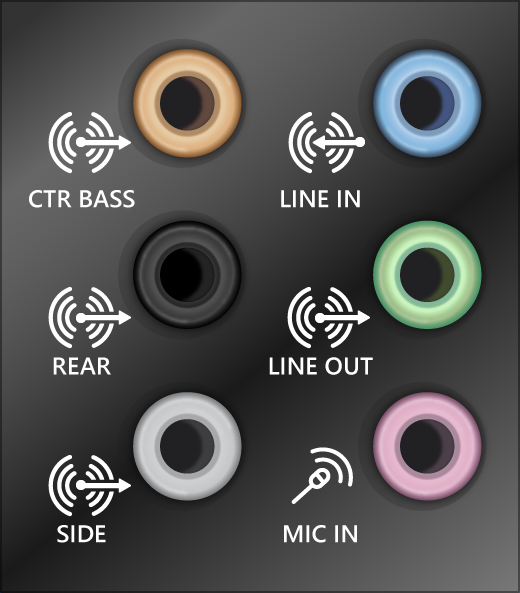
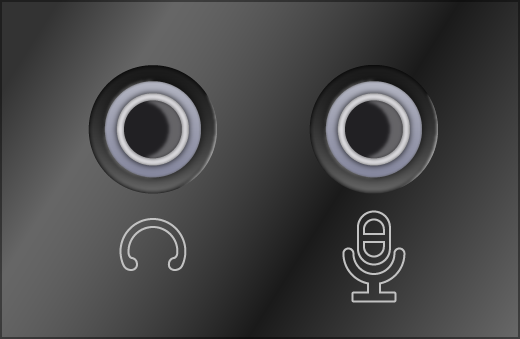
Note:Some systems use a green jack for output and a pink jack for mic input and others will be labeled "headphone" or "microphone."
-
-
Make sure the power is turned on.
-
Make sure the mute setting is non turned on and endeavor turning up all the volume controls.
Notation:Some speakers and apps have their own book controls. Be sure to check them all.
-
Try connecting your speaker and headphones to a different USB port.
-
It'southward possible that your speakers won't work when your headphones are plugged in. Unplug your headphones and see if that helps.
If yous're still having sound problems, see the adjacent sections for additional troubleshooting.
Check to make sure your audio devices aren't muted and haven't been disabled.
-
Select and agree (or correct-click) the Speakers icon on the taskbar, and then select Open Book mixer.
Note:If you don't encounter Speakers displayed, it may be in the overflow surface area. Select Show hidden icons to check in that location.
-
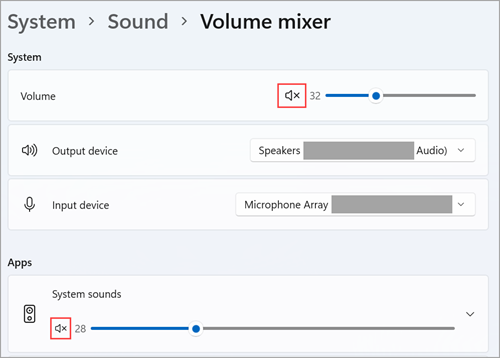
You'll see a set of volume controls for your devices. Make certain none of them are muted. If any of them are muted, you lot'll see an "x" next to the volume command . To unmute practise 1 of the following:
-
Select the volume control and adjust to the desired volume level.
-
Select the Unmute speakers icon.
-
-
Check your device properties to make sure that your devices have not been disabled by mistake. Select Start > Settings > System > Sound .
-
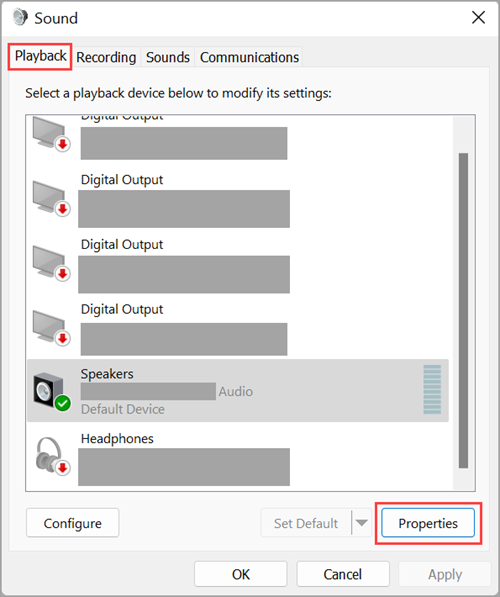
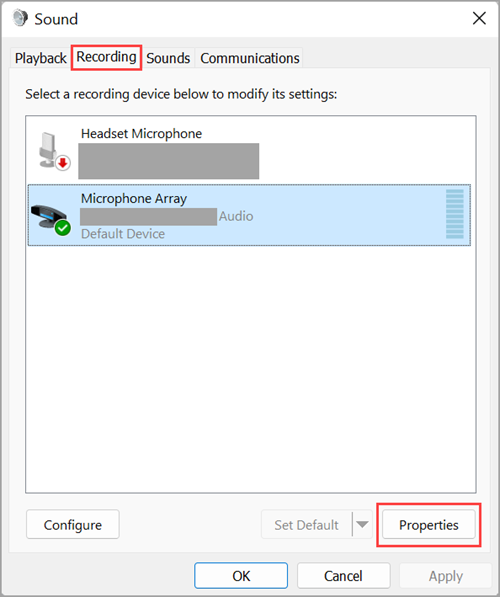
Under Advanced, select More sound settings and select either the Playback (output) or Recording (input) tab.
-
Select your device and and then select Backdrop.
-
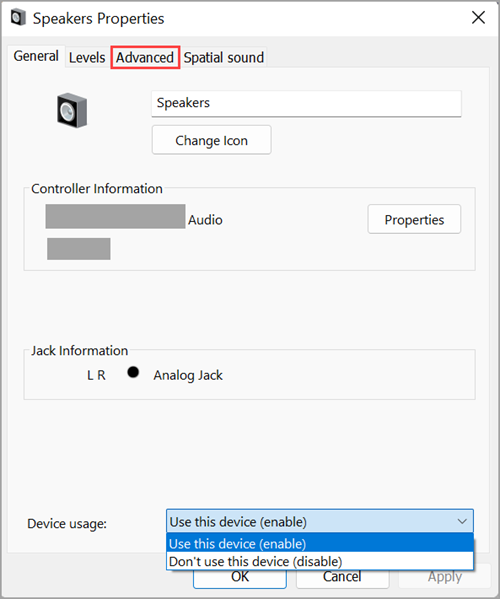
Side by side to Device usage, cheque that Use this device (enable) is selected from the list for the output and input devices.
If that didn't solve your problem, continue to the next tip.
Hardware problems tin can exist caused past outdated or malfunctioning drivers. Make certain your audio driver is upward to date and update it if needed. If that doesn't piece of work, endeavour uninstalling the sound driver (information technology volition reinstall automatically). If that doesn't work, try using the generic audio driver that comes with Windows. If you lot're having audio issues after installing updates, endeavor rolling back your audio commuter.
To update your audio driver automatically:
-
In the search box on the taskbar, blazon device director, then select it from the results.
-
Select the arrow side by side to Sound, video and game controllers to aggrandize it.
-
Select and concur (or correct-click) the listing for your sound card or audio device, such as headphones or speakers, select Update driver, then select Search automatically for drivers. Follow the instructions to complete the update.
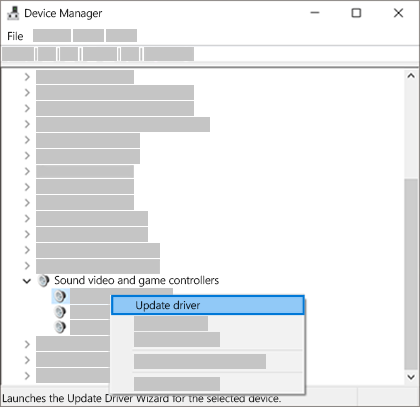
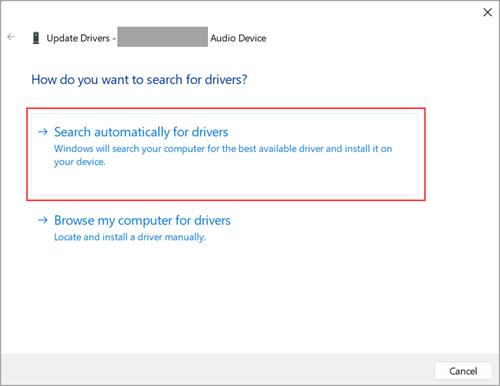
If Windows doesn't find a new commuter, look for one on the device manufacturer's website and follow those instructions. If that doesn't work, try uninstalling your audio driver.
To uninstall your audio driver:
-
In the search box on the taskbar, type device manager, and then select it from the results.
-
Select the pointer next to Sound, video and game controllers to expand it.
-
Select and hold (or right-click) the listing for your sound carte or audio device, select Uninstall device, select the Attempt to remove the driver for this device bank check box, and and then select Uninstall.
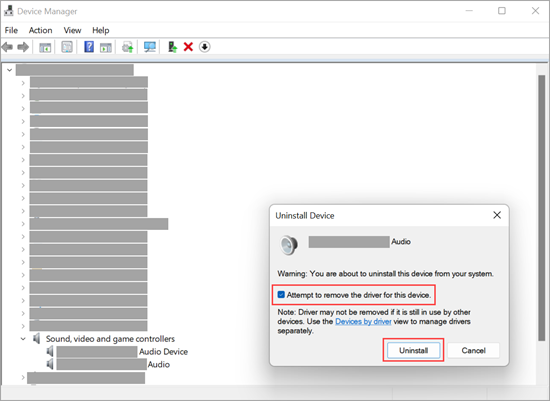
-
Restart your PC.
Note:Be sure to save your documents and any other current work before you lot restart.
-
This restart will automatically prompt your PC to reinstall your audio driver.
-
To restart, select Beginning > Power > Restart .
-
If those options didn't work, try using the generic audio driver that comes with Windows.
To employ the generic audio driver that comes with Windows:
-
In the search box on the taskbar, type device manager, and then select it from the results.
-
Select the arrow next to Sound, video and game controllers to expand it.
-
Select and hold (or correct-click) the listing for your sound bill of fare or sound device, then select Update driver > Browse my computer for drivers> Permit me pick from a list of available drivers on my reckoner.
-
Select the audio device whose driver you want to update, select Side by side, so follow the instructions to install information technology.
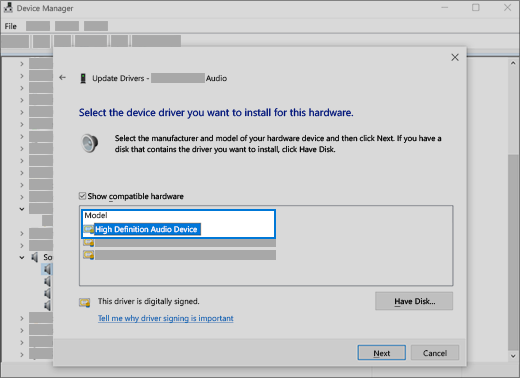
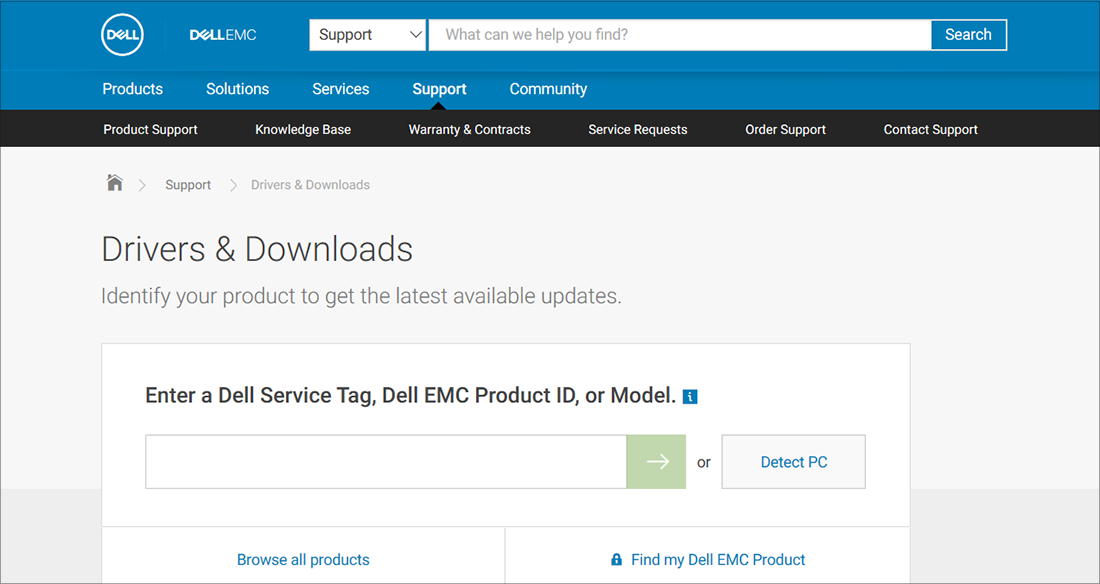
If these steps didn't solve your audio consequence, visit your device manufacturer'south website and install the well-nigh contempo audio/audio drivers for your device. The following is an instance of a driver download page for a sound device manufacturer.
If you accept audio issues afterward installing updates
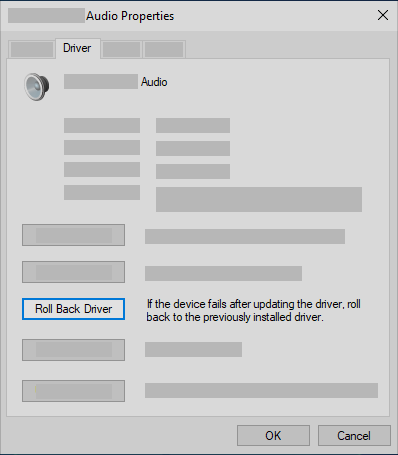
If your audio was working before you lot ran Windows Update and at present isn't working, try rolling back your sound driver.
To roll back your sound driver:
-
In the search box on the taskbar, type device manager, and then select it from the results.
-
Select the arrow next to Sound, video and game controllers to aggrandize it.
-
Select and hold (or right-click) the list for your sound card or sound device, then select Properties.
-
Select the Driver tab, then select Roll Dorsum Driver.
-
Read and follow the instructions and then selectYes if you desire to gyre back your audio driver.
If rolling back your audio commuter didn't work or wasn't an selection, you can effort to restore your PC from a system restore point.
Restore your PC from a system restore point:
When Microsoft installs updates on your system, we create a system restore indicate in instance issues arise. Attempt restoring from that point and meet if that fixes your sound issues. For more info, see "Restore from a arrangement restore point" in Recovery options in Windows.
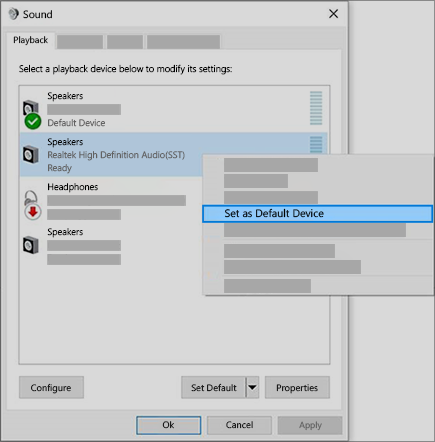
If you're connecting to an sound device—such as headphones or speakers—using USB or HDMI, you might need to set that device equally the default audio device. If y'all're using an external monitor that doesn't have congenital-in speakers, make sure that the monitor isn't already selected as your default output device. if it is, you lot won't have any audio. Yous can check that when you lot set your default output audio device. Hither's how:
-
In the search box on the taskbar, type control panel, then select it from the results.
-
Select Hardware and Sound from the Control Console, then select Audio.
-
On the Playback tab, select and hold (or right-click) the listing for your audio device, select Gear up as Default Device, and then select OK.
If setting your audio device equally the default device doesn't help, continue to the next tip for additional troubleshooting.
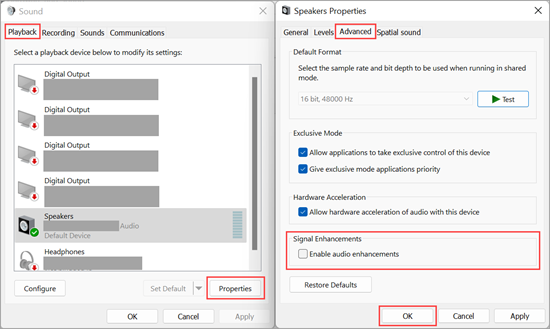
Sometimes having sound enhancements on tin can event in audio bug. Disabling them may resolve your issue.
-
In the search box on the taskbar, blazon control panel, and then select it from the results.
-
Select Hardware and Sound from the Control Panel, and then select Sound.
-
On the Playback tab, select and hold (or correct-click) the Default Device, and then select Properties.
-
Select the Advancedtab and uncheck either the Enable audio enhancements or the Enable audio effects check box (depending on which option you see), select Apply, and try to play your audio device.
-
If that doesn't work, on the Playback tab, select and hold (or right-click) another default device (if you take ane), and select Properties. Uncheck either the Enable sound enhancements or the Enable sound effects cheque box (depending on which selection y'all see), select Utilize, and try to play sound again. Do this for each default device.
If turning off audio enhancements doesn't assistance, run across the side by side sections for additional troubleshooting.
-
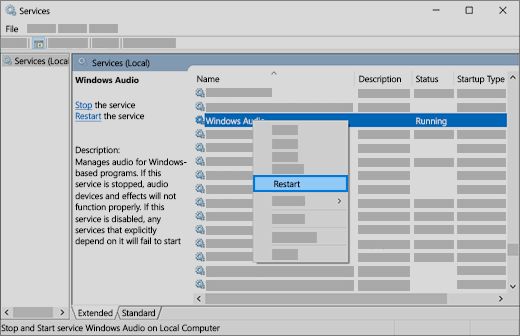
In the search box on the taskbar, type services, then select information technology from the results.
-
Select each of the following services, select and hold (or right-click), select Restart, and then select Yes:
-
Windows Audio
-
Windows Audio Endpoint Builder
-
Remote Procedure Phone call (RPC)
-
If restarting these services doesn't resolve your effect, meet the next sections for more troubleshooting.
-
In the search box on the taskbar, type command console, and then select it from the results.
-
Select Hardware and Sound from the Control Panel, and so select Sound.
-
On the Playback tab, select and agree (or right-click) Default Device, and then select Properties.
-
On the Advanced tab, nether Default Format, modify the setting, select OK, and so test your audio device. If that doesn't piece of work, effort changing the setting again.
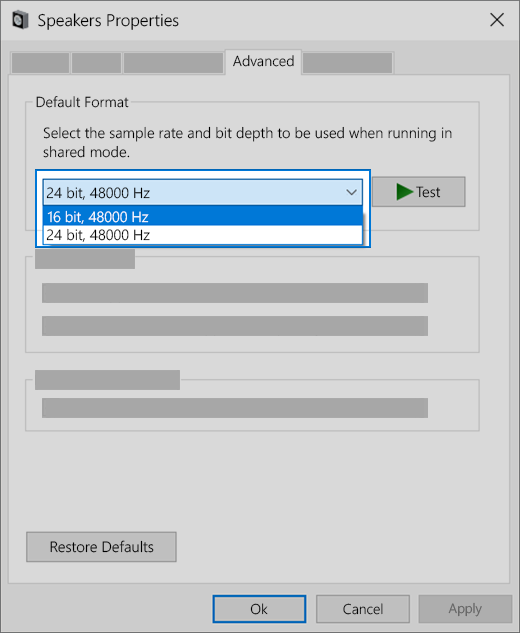
If trying unlike audio formats doesn't help, see the adjacent sections for additional troubleshooting.
Many updates require y'all to restart your device.
To check and run across if you lot have installed updates awaiting and need to restart:
-
Salvage your work and close all open applications.
-
Select Start > Power . If y'all have installed updates pending, you'll see options to Update and restart and Update and close downward.
-
Select one of those restart options to apply the updates.
Need assist with Windows Update? Run into Troubleshoot issues updating Windows.
If restarting doesn't assistance, see the side by side section for additional troubleshooting.
Some sound problems might be caused by an upshot with the audio system's IDT High Definition Audio CODEC. This can be fixed with a manual driver update which allows you lot to cull the audio driver you want to utilize.
Note:Not all systems will accept an IDT High Definition Audio CODEC.
To check and see if you lot have i, and to manually update the commuter:
-
In the search box on the taskbar, type device manager, then select information technology from the results.
-
Select the arrow next to Audio, video and game controllers to aggrandize it.
-
Look for IDT High Definition Audio CODEC. If it'due south listed, select and hold (or correct-click) it and select Update driver,then select Browse my figurer for drivers> Let me choice from a list of available drivers on my computer.
-
Yous'll see a list of pre-installed drivers. Select High Definition Audio Device, and then select Adjacent.
-
Select Start > Settings > Privacy & security.
-
Under App permissions, select Microphone.
-
Make sure that the Microphone access and Let apps access your microphonetoggles are turned On.
-
If you lot're having this consequence with a specific app, whorl down under Allow apps access your microphoneand brand certain that the toggle next to that specific app is turned On as well.
If multiple audio output devices are available, cheque that you lot have the appropriate ane selected. Hither's how:
-
Select the Speakers icon on the taskbar.
Note:If yous don't see Speakers displayed, it may be in the overflow expanse. Select Bear witness hidden icons to cheque there.
-
Side by side, select the arrow to open a listing of sound devices connected to your computer.
-
Cheque that your sound is playing to the audio device you lot prefer, such as a speaker or headphones.
If this doesn't help, continue to the next tip.
The audio troubleshooter might be able to set up sound bug automatically.
To run the troubleshooter:
-
In the search box on the taskbar, blazon audio troubleshooter, select Find and fix problems with playing sound from the results, then select Next.
-
Select the device you want to troubleshoot and and so go on through the troubleshooter.
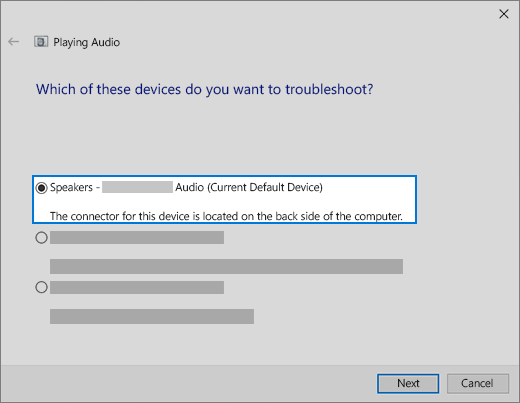
You can also launch the troubleshooter from audio Settings. Select Start > Settings > Organisation > Sound > Troubleshoot.
If running the troubleshooter doesn't help, keep to the next tip.
To check for updates:
-
Select Offset > Settings > Update & Security > Windows Update > Check for updates.
Open up Windows Update
-
Do one of the following:
-
If the status says, "Y'all're upward to engagement," get to the adjacent tip.
-
If the status says, "Updates are bachelor," select Install at present.
-
-
Select the updates yous want to install, then select Install.
-
Restart your PC and see if your audio is working properly.
If that didn't solve your trouble, continue to the next tip.
Attempt these steps:
-
Cheque your speaker and headphone connections for loose cords or cables. Make sure all cords and cables are plugged in.
-
If yous have multiple 5mm jacks to plug into, especially on a environment audio system, make sure all cords and cables are plugged into the right jack.
-
If it's not articulate which jack goes with which cord, consult your hardware manufacturer, or try the most obvious outputs ane at a time and meet if they work.
Note:Some systems employ a green jack for output and a pink jack for mic input and others volition be labeled "headphone" or "microphone."
-
-
Make sure the power is turned on.
-
Make certain the mute setting is non turned on and try turning upwards all the volume controls.
Note:Some speakers and apps have their own book controls. Be sure to cheque them all.
-
Attempt connecting your speaker and headphones to a different USB port.
-
It'due south possible that your speakers won't work when your headphones are plugged in. Unplug your headphones and see if that helps.
If y'all're all the same having audio issues, see the next sections for additional troubleshooting.
Check to brand sure your audio devices aren't muted and haven't been disabled.
-
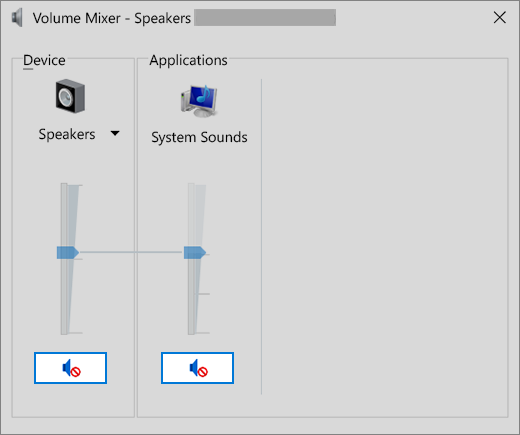
Select and hold (or right-click) the Speakers icon on the taskbar, then select Open up Volume mixer.
Note:If yous don't see Speakers displayed, information technology may be in the overflow area. Select Evidence subconscious icons to bank check at that place.
-
You'll see a set up of volume controls for your devices. Make sure none of them are muted. If any of them are muted, you'll see a red circumvolve with a line through information technology next to the volume control. In that case, select the book control to unmute.
-
Bank check your device properties to make certain that your devices accept not been disabled by error. Select Offset > Settings > Organisation > Audio .
-
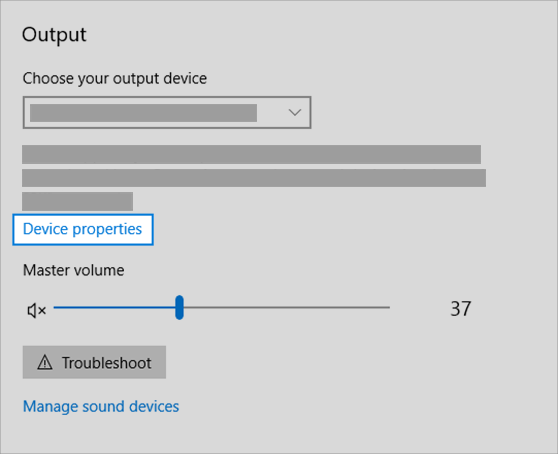
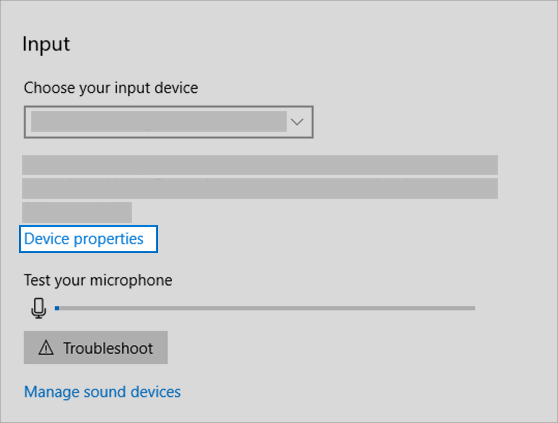
Select your sound device, and and then select Device properties. Be sure to selectDevice properties for both the output and input devices.
-
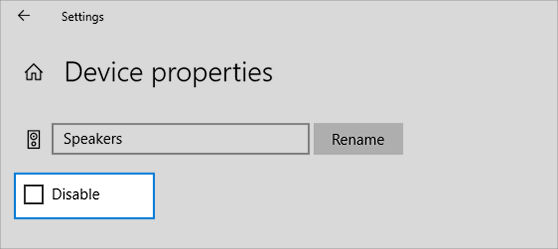
Brand sure the Disable check box is cleared for the output and input devices.
If that didn't solve your problem, continue to the next tip.
Hardware bug tin be caused by outdated or malfunctioning drivers. Make sure your sound driver is up to date and update it if needed. If that doesn't work, endeavour uninstalling the audio driver (it volition reinstall automatically). If that doesn't work, try using the generic audio driver that comes with Windows. If you're having audio problems after installing updates, attempt rolling back your audio commuter.
To update your sound driver automatically:
-
In the search box on the taskbar, type device manager, then select it from the results.
-
Select the pointer next to Audio, video and game controllers to expand information technology.
-
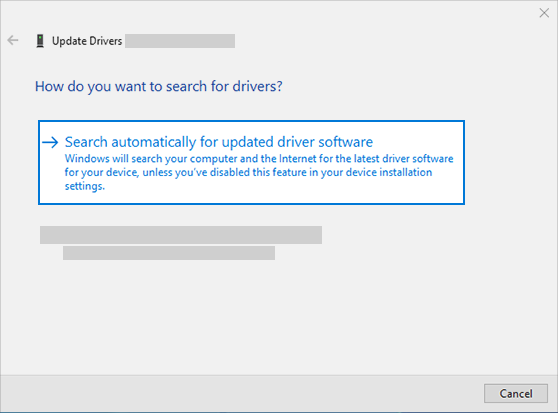
Select and hold (or correct-click) the listing for your sound menu or audio device, such as headphones or speakers, select Update commuter, then select Search automatically for updated commuter software. Follow the instructions to complete the update.
If Windows doesn't discover a new driver, look for one on the device manufacturer'due south website and follow those instructions. If that doesn't work, endeavour uninstalling your audio commuter.
To uninstall your sound driver:
-
In the search box on the taskbar, type device manager, then select it from the results.
-
Select the pointer adjacent to Audio, video and game controllers to expand it.
-
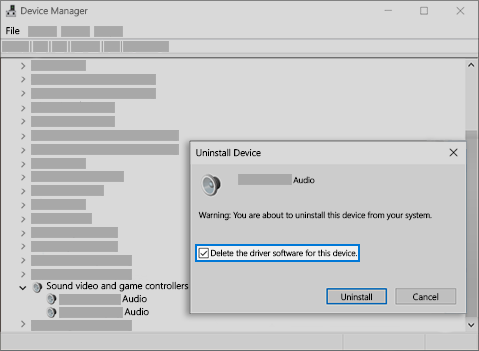
Right-click the listing for your sound card or audio device, select Uninstall device,select the Delete the driver software for this device bank check box, and then select Uninstall.
-
Restart your PC.
-
Notation: Be certain to save documents and any other current piece of work before you restart.
-
This restart will automatically prompt your PC to reinstall your audio driver.
-
To restart, select Kickoff > Ability > Restart .
-
If those options didn't piece of work, try using the generic audio commuter that comes with Windows.
To utilise the generic sound driver that comes with Windows:
-
In the search box on the taskbar, type device manager, then select it from the results.
-
Select the arrow next to Sound, video and game controllers to expand information technology.
-
Select and hold (or correct-click) the listing for your sound menu or audio device, so select Update driver > Browse my estimator for drivers> Let me choice from a list of device drivers on my computer.
-
Select the audio device whose commuter yous desire to update, select Next, and then follow the instructions to install it.
If these steps didn't solve your audio issue, visit your device manufacturer's website, and install the most recent audio or sound drivers for your device. The following is an case of a driver download page for a sound device manufacturer.
If you have audio issues later on installing updates
If your audio was working before you ran Windows Update and now isn't working, endeavour rolling dorsum your audio commuter.
To gyre back your audio commuter:
-
In the search box on the taskbar, blazon device director, then select information technology from the results.
-
Select the arrow next to Audio, video and game controllers to expand it.
-
Select and hold (or right-click) the listing for your audio card or audio device, then select Properties.
-
Select the Driver tab, then select Curl Back Commuter.
-
Read and follow the instructions and and so selectYep if y'all want to curl back your sound commuter.
If rolling back your audio driver didn't piece of work or wasn't an selection, you lot can endeavour to restore your PC from a system restore signal.
Restore your PC from a system restore point:
When Microsoft installs updates on your organisation, nosotros create a system restore point in case problems arise. Attempt restoring from that point and run across if that fixes your sound bug. For more info, meet "Restore from a system restore signal" in Recovery options in Windows.
If you're connecting to an audio device—such equally headphones or speakers—using USB or HDMI, you might need to set that device as the default audio device. If you're using an external monitor that doesn't accept built-in speakers, brand certain that the monitor isn't already selected as your default output device. If it is, you won't take whatever audio. Y'all can check that when you set your default output audio device. Here'southward how:
-
In the search box on the taskbar, blazon control panel, and so select information technology from the results.
-
Select Hardware and Sound from the Control Panel, and so select Audio.
-
On the Playback tab, select and hold (or right-click) the list for your audio device, select Set every bit Default Device, and and so select OK.
If setting your sound device equally the default device doesn't help, go on to the next tip for boosted troubleshooting.
Sometimes having sound enhancements on can result in audio issues. Disabling them may resolve your issue.
-
In the search box on the taskbar, type control panel, then select it from the results.
-
Select Hardware and Audio from the Control Panel, and then select Audio.
-
On the Playback tab, select and hold (or right-click) the Default Device, and and then select Backdrop.
-
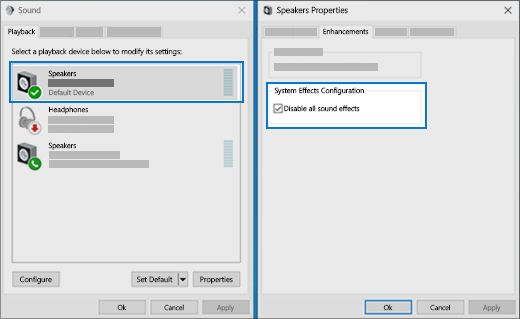
On the Enhancements tab, select either the Disable all enhancements or the Disable all sound furnishings bank check box (depending on which pick you see), select OK, and attempt to play your audio device.
-
If that doesn't work, on the Playback tab, select and concur (or correct-click) another default device (if you lot have one), then select Properties. On the Enhancements tab select either the Disable all enhancements or the Disable all audio effects check box (depending on which selection you see), select OK, and try to play sound over again. Exercise this for each default device.
If turning off sound enhancements doesn't help, see the next sections for additional troubleshooting.
-
In the search box on the taskbar, type services, then select information technology from the results.
-
Select each of the following services, right-click, and then select Restart:
-
Windows Sound
-
Windows Sound Endpoint Builder
-
Remote Procedure Call (RPC)
-
If restarting these services doesn't resolve your result, see the adjacent sections for more than troubleshooting.
-
In the search box on the taskbar, type control panel, and and so select it from the results.
-
Select Hardware and Sound from the Command Panel, and then select Sound.
-
On the Playback tab, select and hold (or correct-click)Default Device, and then select Properties.
-
On the Avant-garde tab, under Default Format, change the setting, select OK, and then examination your sound device. If that doesn't work, try irresolute the setting once more.
If trying dissimilar audio formats doesn't aid, see the next sections for additional troubleshooting.
Many updates require you to restart your device.
To check and run into if you take installed updates pending and demand to restart
-
Save your work and close all open up applications.
-
Select Start > Power . If you have installed updates pending, you'll run into options to Update and restart and Update and shut down.
-
Select one of those restart options to apply the updates.
Demand help with Windows Update? See Troubleshoot problems updating Windows.
If restarting doesn't assist, encounter the next section for boosted troubleshooting.
Some audio problems might be acquired by an result with the audio system's IDT High Definition Audio CODEC. This can exist fixed with a manual driver update which allows yous to choose the sound commuter you want to use.
Note:Not all systems will take an IDT High Definition Audio CODEC.
To check and run into if yous have i, and to manually update the driver:
-
In the search box on the taskbar, type device managing director, then select it from the results.
-
Select the arrow next to Sound, video and game controllers to expand it.
-
Look for IDT Loftier Definition Audio CODEC. If it's listed, select and concord (or right-click) it and select Update driver, so select Browse my computer for drivers> Permit me pick from a list of device drivers on my estimator.
-
You lot'll see a list of pre-installed drivers. Select High Definition Sound Device, and so select Next.
-
Select Start > Settings > Privacy , and and so select Microphone from the left card.
-
Under Allow access to the microphone on this device, select Change. Make certain the toggle is turned On.
-
If you're having this issue with a specific app, scroll downward to Choose which Microsoft Shop apps tin can access your microphone and brand sure that the toggle side by side to that app is turned On as well.
Source: https://support.microsoft.com/en-gb/windows/fix-sound-or-audio-problems-in-windows-73025246-b61c-40fb-671a-2535c7cd56c8
Posted by: landersseentrusted83.blogspot.com
0 Response to "How To Manage Audio Devices In Windows 10"
Post a Comment