

How To Play Htc Vive Games On Windows Mixed Reality
The best VR headset in 2022
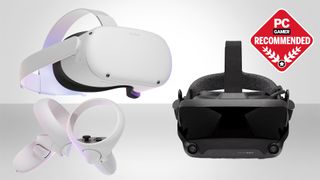
The best VR headset can draw you into a galaxy far, far abroad with Star Wars: Squadrons, or take you lot cruising through our very ain atmosphere in Microsoft Flying Simulator with ease and comfort. There are plenty of headsets out there, and while many of them excel in graphical fidelity and technical feats, the all-time VR headsets are the ones that are like shooting fish in a barrel to use, also. We've tested a dozens of VR headsets from Valve, Oculus, HTC, HP, Samsung, and more, and these are the all-time ones.
PC gamers once preferred tethered VR headsets, just with the release of the standalone Oculus Quest two (which can be tethered to your PC if you lot want), at that place'south been a primal shift in the marketplace. Coming in at just $299 for a genuinely bang-up experience, it'southward non something a prospective VR gamer can ignore. There'due south all the same definitely a identify for premium VR headsets, just they need to bring something special to the table to compete—thankfully plenty of them practice.
Once you've nabbed yourself one of the all-time VR headsets effectually, there's the question of what to play on it. One-half-Life: Alyx shows what VR is capable of in the right hands, but there are plenty of other sci-fi titles to enjoy, such as No Homo's Sky (you'd do best to sit for that one). If yous're stuck for ideas, check out the best VR games on PC.
Whatever you choose to play, it really is a corking time to get into virtual reality.
Best VR headsets
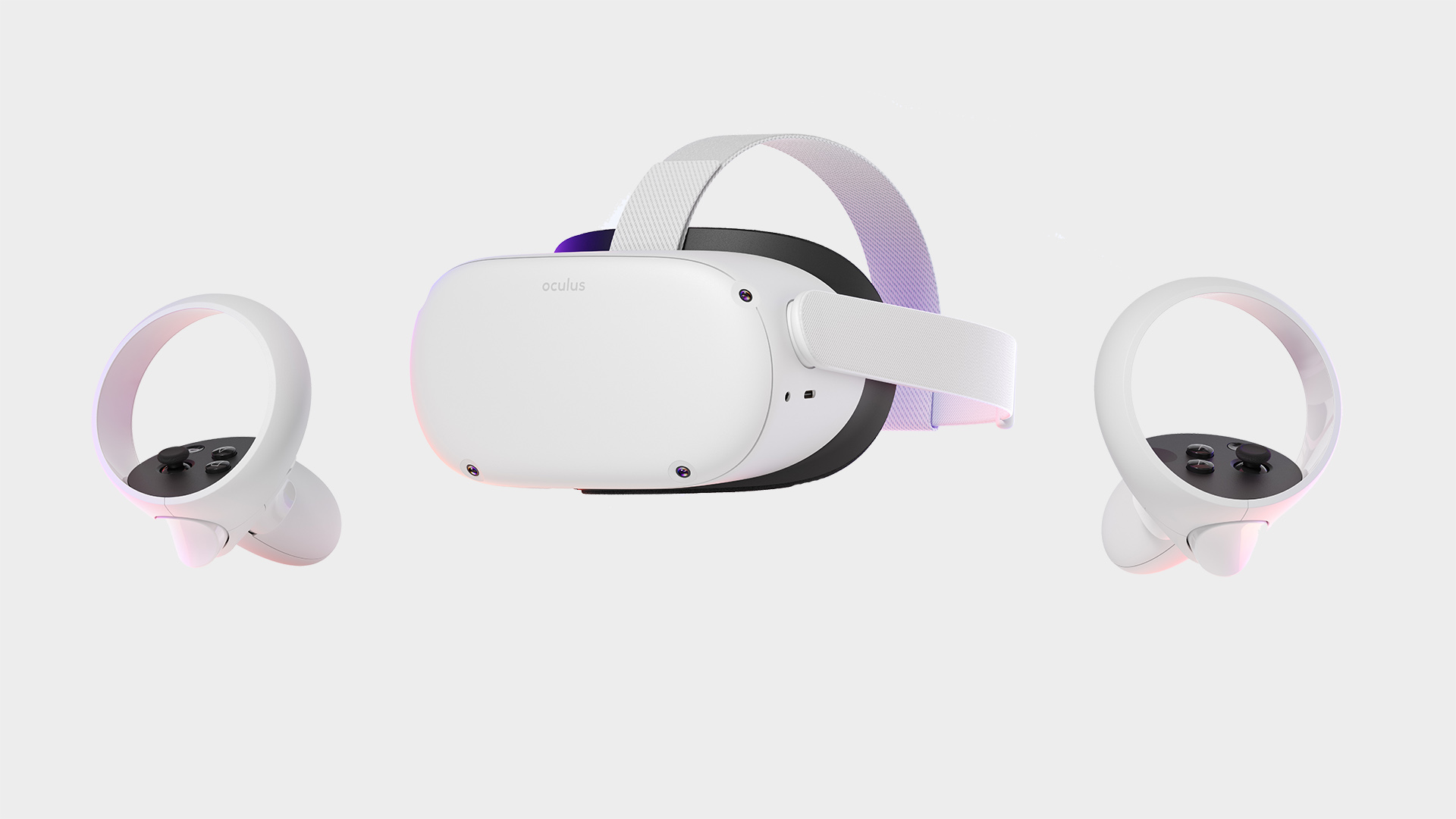
The Oculus Quest two both improves on the specs sheet of the original Quest and delivers information technology for cheaper. With a new LCD at 1832 x 1920 per eye, the Quest two offers exceptional clarity for an entry-level headset.
Then long equally yous proceed the headset at a decent level with your eyes in the centre, the image comes through crisp and articulate. The OLED of the previous model is sure to offer greater contrast, merely improved resolution and clarity for slightly worse blacks levels is a deal I would make for VR every single fourth dimension.
The improvements between this and the original Oculus Quest go beyond console and resolution too. The newer model comes equipped with the Snapdragon XR2 System-on-Chip (SoC) from Qualcomm, which is a marked improvement over the Snapdragon 835 SoC from before. That also now comes with 6GB of RAM, a step-up from the 4GB on the original model.
You tin can either play games purpose-congenital for the standalone headset, and thus rendered by the onboard Snapdragon XR2 fleck, or beamed from your PC using Oculus Link and a uniform USB Type-C cablevision.
And thanks to Oculus Link, the Quest 2 becomes more than a standalone VR headset. It becomes an all-in-ane VR Swiss army knife, capable of great on-the-move VR and gaming across SteamVR and Oculus Rift compatible titles. Information technology'due south now capable of up to 120Hz refresh charge per unit, thanks to a recent update, making it an even sweeter bargain.
The storage capacity on the larger of the 2 available models has also been increased to 256GB, upward from the 128GB max capacity of the previous generation, while the cheapest model remains at 64GB. The less capacious unit of measurement is what I've been testing, merely even with significantly less space you lot'll have no issue keeping a one-half-decent catalogue of VR games, experiences, and apps installed.
The Quest ii is 1 of the quickest headsets to get upwardly and running on this list. With Within-Out tracking and hand tracking built-in, you can become from unboxing to up-and-running in VR in but a couple of minutes. The first time setup procedure will take you lot removing your headset, memorising Wi-Fi passwords, putting the headset back on again, and so waiting around for a couple of updates. It'south a lilliputian fiddly, simply yous need only exercise information technology once and it'srelativelyquick to complete.
Before you're able to beam your PC desktop to the Quest, yous have to follow the on-screen setup. These are delivered through a mix of in-headset and in-app prompts, which is a picayune tiresome at times, and fundamentally inaccessible for others. That all depends on whether you're a Facebook user or you're non.
That'southward our major hitch with recommending the Oculus Quest ii. It's plan for virtual world domination via compulsory Facebook account login. The Oculus Quest ii requires a Facebook account, though researchers accept managed to bypass it. The company says it's to meliorate serve you, the client, with services and products, although for a skillful while there the only discernible 'benefit' was direct to feed screenshots. Non peachy. Meta did seemingly look to be rid of this mandatory login, merely it'south currently withal in place.
If you're non a fan of Meta's (née Facebook'due south) practices then you'd best scroll further downwards the list for a VR headset worth investing in.
If it doesn't bother you, setting up your play area isn't equally awkward every bit some. The infinite you designate as prophylactic for VR shenanigans tin can exist as wobbly and irregular-shaped as yous please (different Steam VR), and y'all only demand touch the footing with a controller to fix your floor height correctly. To get it right, you lot'll even be able to see a live feed of the globe in greyscale from the exterior Quest ii cameras.
As for tracking, most tethered headsets require the apply of an external sensor, or two. The Oculus Quest two is a self-independent unit capable of tracking controller, mitt, and headset move without further kit, as did its predecessor.
One relatively new feature carried over from the Quest is hand tracking, which tracks the twin Oculus Touch controllers, and is surprisingly accurate. Fifty-fifty base stations aren't a flawless solution, especially not those included with the original Rift, and the inside-out tracking on the Quest 2 manages to keep up uncommonly well, and without fear of falling out of eyeline with the sensors.
The standalone experience is admittedly still hampered by the low-power silicon, and there'southward no getting around that. The Quest ii not just deals with the processing onboard, but it's as well trying to conserve bombardment power to ensure a half-decent run. That'southward roughly around two hours of battery life for gaming.
Read our full Oculus Quest ii review.
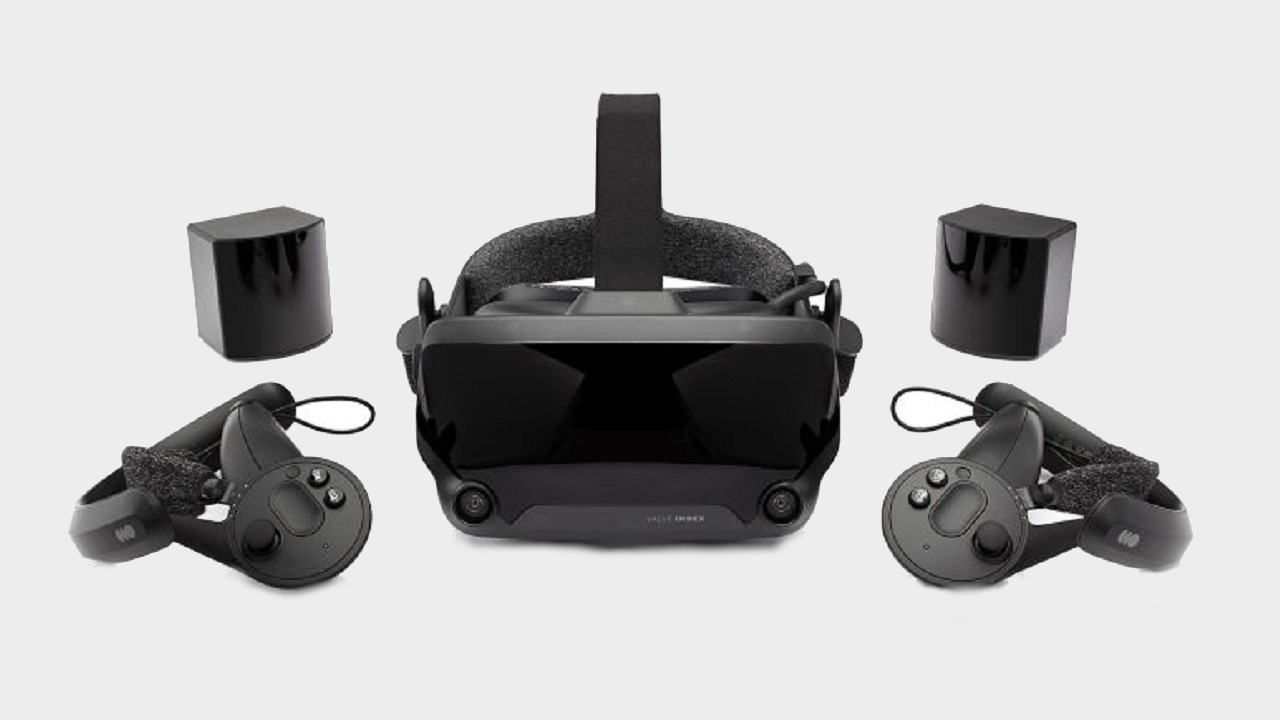
The Valve Index boasts some of the best visuals of any mainstream, commercially bachelor HMD, with a display resolution equaling the Vive Pro, Quest, and Odyssey+ but paired with a 120Hz refresh rate (up to 144Hz in a currently unsupported, experimental way). The FOV, at 130°, is also all-time-in-form, and in that location's nearly no detectable screen door effect inside the headset.
At that place's also a punch and slider for lens adjustment, helping you become the placement just right for maximum comfort and FOV.
The Valve Index feels cracking to wear. Information technology's a bit heavier than the Rift S—enough that the weight was noticeable in our side-by-side comparison—but the shape of the head strap better distributes that weight around your head. Non to mention information technology's built from carefully selected, loftier-quality materials, with top-notch weight distribution. The strap materials feel quality too—more like a padded extra-soft t-shirt than standard cream padding—never bothering me during extended play sessions. But most chiefly, the Alphabetize is comfortable considering of how it delivers audio.
Congenital-in well-nigh-field speakers hover just adjacent to your ears, powered by speaker drivers instead of the ones commonly plant in headphones. What this ways is the Alphabetize's speakers offer outstanding iii-dimensional surround sound, somehow likewise delivering a level of aural isolation without shutting yourself off completely to external noises. With zero force per unit area on your ears, in that location'south less fatigue from staying in VR for an extended period of time, and they somehow don't drain audio into the residue of the room, either.
The other hallmark feature of the Alphabetize is its new controllers, which double as both typical motion controllers and manus/finger trackers. The Index controllers strap to your easily—meaning you lot can release your grip entirely without worrying nigh dropping them.
Finger tracking is i of the distinguishing features of Valve's Alphabetize, but at that place aren't many impressive implementations yet. The best use and then far is the Aperture Hand Labs tech demo, which has you lot waving to, loftier-fiving, and playing stone-newspaper-scissors with a collection of quirky Portal-style robots. Where previous impact controllers could only articulate grip, the Index controllers allow me give a thumbs-up, point with finger guns, or even offer a Vulcan salute.
Not a whole load of games use finger tracking correct now, which means exterior of Aperture Hand Labs and One-half Life: Alyx, the feature tin can feel a little gimmicky. However, there'due south a great bargain of potential at that place for future games.
The Valve Index also boasts some impressive engineering and handy convenience features like USB passthrough for future accessories.
The Index is a roomscale VR experience, which means information technology requires two base station sensors positioned effectually your play area. The HTC Vive and Vive Pro, equally well equally the final-gen Oculus Affect controllers all utilize base stations. But the competition is vehement. The Rift S, and Vive Cosmos use inside-out tracking—that is, sensors on the headset instead of placed around your room. After growing accustomed to that more streamlined feel, setting up sensors for the Index was frustrating.
Information technology does deliver a more than responsive feel than whatsoever of the inside-out options, though; there's a reason the more recent Vive Cosmos Elite goes back to prioritizing the base stations.
After setting it the base stations, the roomscale setup can be a hurting. With the Rift Southward, the headset's cameras give you a digital view of your surroundings to draw your play surface area in seconds. But the Alphabetize'south setup has to exist done via Steam on your estimator, before you even put the headset on. Subsequently calculating flooring meridian, yous click the trigger at four corners of your available infinite, which Steam then measures in society to determine your best play area. After using the Rift S, it but feels quondam-fashioned—like having to beginning your car with a crank.
And all those premium features come at a price. It's the best VR headset on the market... if yous don't consider the value proposition. At nearly a thou dollars, the complete Index packet costs as much as three Quest 2s.
Read our total Valve Index review.
Best gaming keyboard | Best gaming chairs | Best mechanical keyboard| Best wireless gaming mouse | Best wireless gaming keyboard
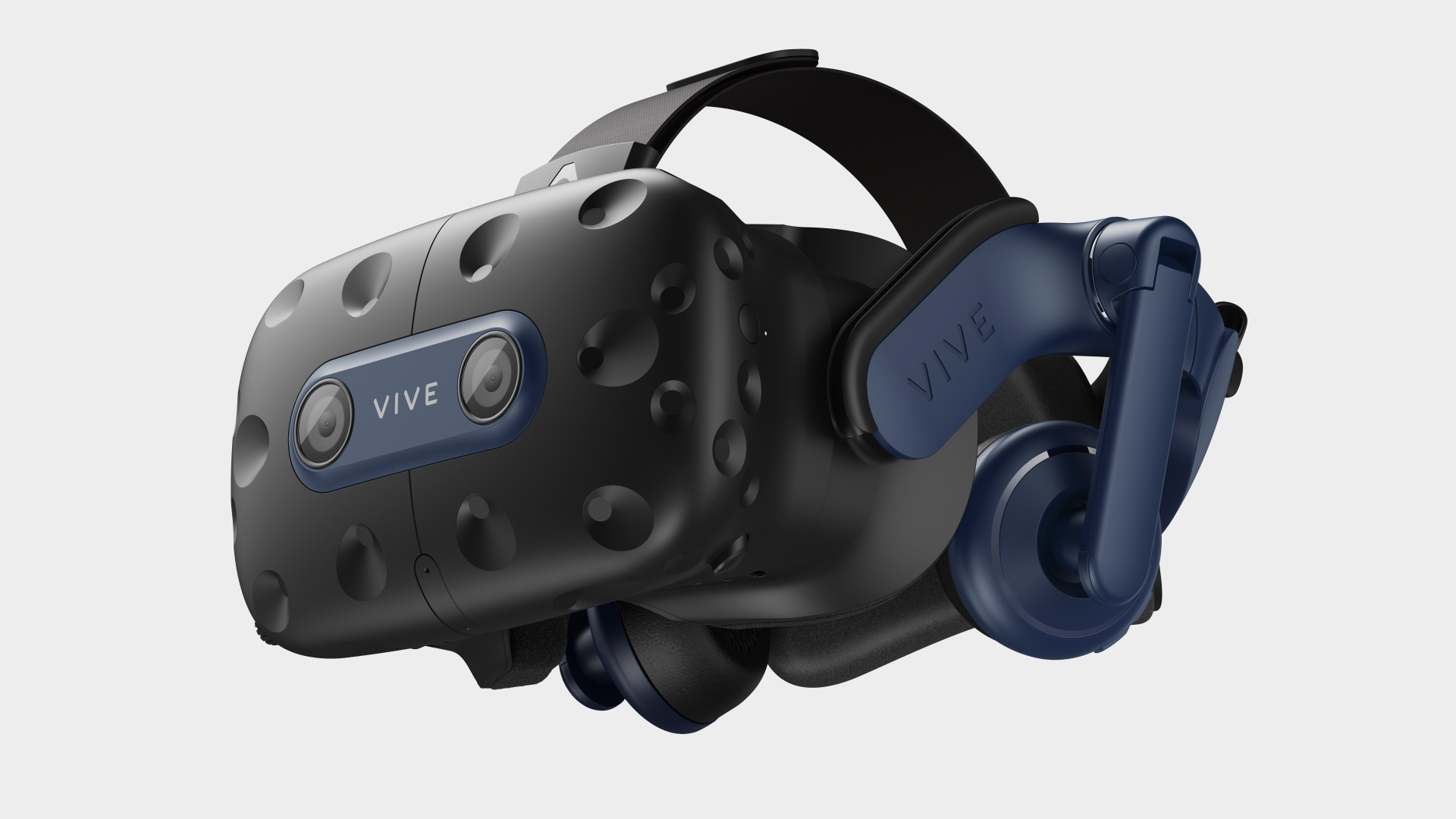
The HTC Vive Pro two is 1 of the virtually contempo headsets to hit the market, and it brings with it a number of updates on the display forepart to brand information technology i of the most impressive mainstream options effectually. The native resolution of 2448 ten 2448 pixels per middle is incredible, and when coupled with the 120Hz refresh charge per unit and 120-degree field of view, makes for i of the best viewing experiences around.
The Vive Pro 2 is one of the highest resolution mainstream headsets yous can drib your money on and offers a significant border over the Oculus Quest 2 as well, which settles for 3664 x 1920. It's keen for loftier fidelity games, but a less obvious upgrade in more than cartoony titles—meaning you really need high-resolution textures and models to truly enjoy the benefits this headset brings.
There's no obvious screen door effect either, and at this resolution it feels like the hardware side of VR has been solved.
Of class, at these kinds of resolutions, yous'll need a high-end machine to get the most from this headset though, with HTC recommending an Nvidia GeForce RTX 20-series or Radeon RX 5000-series GPU to maintain a smooth experience. For testing, we hooked up the headset to our high-end test PC, which is dwelling house to a GeForce RTX 3080 and an AMD Ryzen 9 5900X. We had no problems running any of the games on this setup.
It's very much a tethered feel, and while the cablevision that connects y'all to your PC is generous, there are still times when information technology gets in the way and yanks you out of your virtual globe. If you pine for cablevision-free gaming, then the headset is compatible with the HTC Vive wireless adapter, but that costs an extra $349 (£359) and too limits the refresh charge per unit to 90Hz—not exactly platonic.
The headset itself is comfortable to vesture, although I did notice myself getting hot after a while. There's plenty of foam padding to assistance keep things comfortable, although this acts every bit an insulator as well. Information technology's not the lightest headset around, but it is really well-balanced, so doesn't feel overly heavy.
As for the software side of getting the Vive Pro ii up and running, that's handled past HTC's setup app, which goes through the proceedings in a logical fashion before handing over control to Steam VR for the terminal configuration. This works well and highlights any bug as you lot go.
HTC has stuck with the satellite setup for the Vive Pro 2 to ensure you get accurate controller tracking, which means y'all'll need plenty of ability sockets to get everything upwards and running. The full starter kit comprises the headset, ii commencement-generation controllers, and a pair of Base Station ii.0 satellites.
Setup is all the same a bit of a pain, and requires mounting the satellites in a way and then that they're not bouncing around in response to your ain virtual shenanigans. They come up with wall mounting brackets, which is probably the best solution. Y'all'll need to place them almost power sockets too, equally each satellite needs plugging in, and you lot'll demand an extra socket for the headset breakout box besides.
Information technology's not plug-and-play is what we're proverb.
The headset is available on its own, which is useful if you're upgrading from a first-generation setup. That total-kit is surprisingly pricey at $ane,399 (£1,299), while the headset on its own will fix you back $799 (£719). It'southward a pricey upgrade over the Valve Alphabetize and doesn't exercise enough across the improved display to really justify that cost. Still, if you're looking for the very best brandish around, particularly as an upgrade, in that location's certainly a case to be made for the Vive Pro ii. It's a shame the starter kit is so expensive actually.
Read our total HTC Vive Pro ii review.
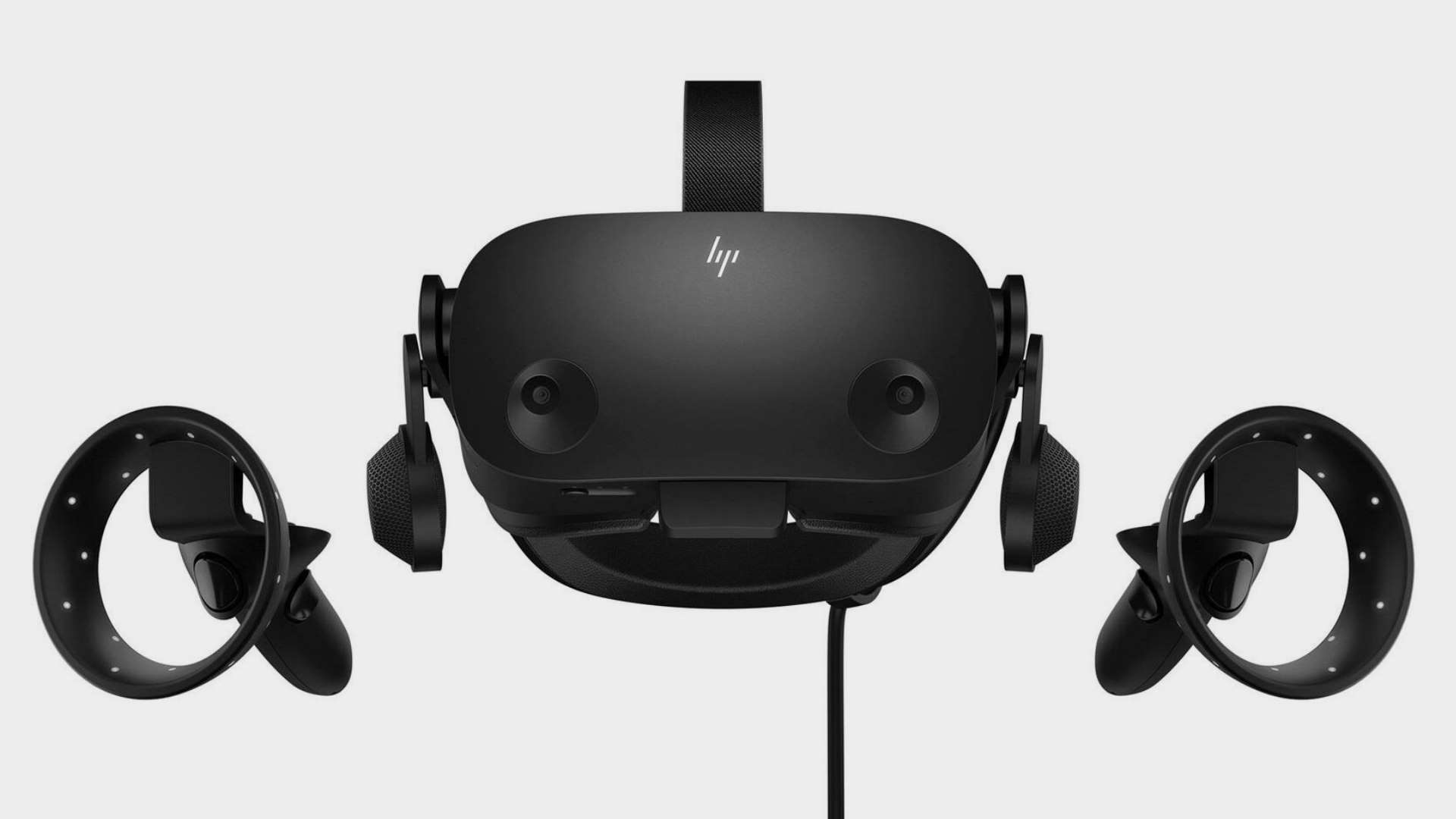
The HP Reverb G2 has won a place here with the best VR headsets, thanks in no minor part to its fantastic resolution. If future-proofing your setup in terms of image fidelity is your principal concern, it will not disappoint. With 2160p per heart, the Reverb G2 manages to completely alleviate the screen door effect that tin cause bug with some lower resolution headsets—provided yous take a powerful enough GPU to handle information technology.
You are able to step downward the resolution per eye with relative ease if it surpasses the limitations of your hardware, though. And even playing in lower resolutions, you lot get to accept reward of great features like the highly inclusive, physical IPD toggle on the underside of the headset, the range of which is impressive compared to other options on the marketplace.
The utilise of standard Mixed Reality controllers is a little disappointing. While they're battery operated for quick juice swaps, they forgo a lot of the more than advanced features establish in other designs like the Valve Index's finger-tracking knuckle controllers.
The Reverb G2'southward tracking solution does mean no base stations are necessary, and that means simpler setup, only as well comes with some drawbacks. Visible lite tracking ways surrounding lighting weather condition can really affect your feel. Don't expect it to work particularly well in a Sunroom, or in the dark, as the headset relies on a very particular lighting requirement to position you properly in physical infinite.
The hand tracking is a petty limited without base stations, too, only HP counters this with fantastic IMU gyro sensors volition predict movements beyond the tracking area, as long equally they are fluid motions. Belongings your easily nevertheless tells a dissimilar story, merely this shouldn't make a departure in most in-game situations. It'due south possible to land steady sniper shots even when prone, every bit long as yous don't pull the controllers too close to your face up.
And speaking of invading your headspace, the headset is a snug fit. The Velcro strap gets caught in my hair a fair bit, but its a comfy solution. It needs to exist quite tight on to prevent slippage and, although information technology'south not the heaviest VR headset around, at that place's a noticeable pressure on the cheeks. Later on extended periods of play this can make you feel strange due to interference with the sinuses. Either way it doesn't put whatsoever pressure on the span of the nose itself, and in that location's plenty room to wear glasses inside comfortably.
Some users have complained of problem with the curvature on the face gasket being as well extreme, simply in that location are 3D printed solutions out in that location if it doesn't fit correct. However, the Reverb G2's tether at least is a pace up from the G1, in that it's at present a singular cable as opposed to two next cables. At nineteen.5 foot (6m), it's a fiddling longer than a lot of other tiptop VR headsets, but the jelly experience means it catches on itself, making it a little bad-mannered to untangle.
The off-ear, BMR powered headphones are vivid, however. Not merely is the sound quality incredible, it also helps with keeping you absurd and immersed without anything more pressing upwards against the side of your face. They're similar to the headphones used on the Index, and hopefully we'll run across more than headsets utilise the tech going forwards.
The HP Reverb G2 works seamlessly with Steam VR, though I practise have some gripes with its reliance on Windows Mixed Reality. Substantially there is no way to stop it from opening on startup if yous've left the headset plugged in, bated from uninstalling it—which I don't desire to do because it does include some cool features. Other than that, I've no existent complaints on the software front end when information technology comes to actually using the assail a solar day-to-mean solar day basis.
The Reverb G2 might not have all the fancy greebles of some of the other headsets on the list, information technology has plenty neat features that practise make it worth a await for the money.
Read our full HP Reverb G2 review.
The best of virtual reality
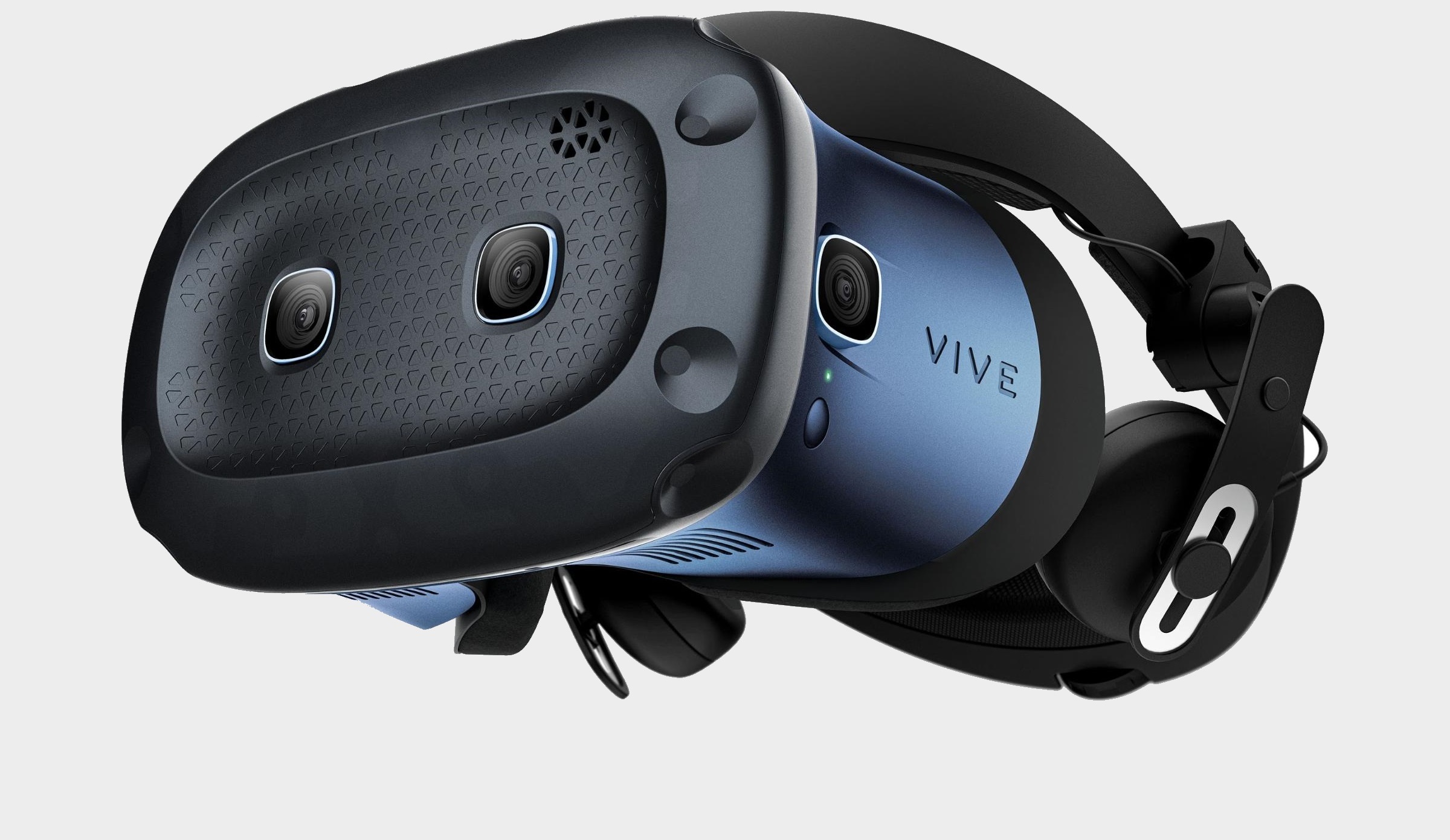
The HTC Vive Creation Elite is attempts to address some of the problems with the original HTC Vive Cosmos, while maintaining the core specifications of that model, which is chiefly the dual 4.three-inch 1440 x 1700 displays running at 90 Hz.
it comes bundled with the One-half-Life: Alyx and half-dozen-months of Viveport Infinity subscription, which at the very least means there are lots of things to try out with your new headset.
The Cosmos Elite is substantially the original Cosmos, with the kickoff generation base stations and controllers, but a unlike faceplate attached to the headset. If yous've already bought the Creation, you tin can upgrade it with a new faceplate for $200, although you'll need to buy your ain base stations separately to use it. The modularity means you tin fifty-fifty add the wireless adapter, although at $350 for that alone, this solution can get expensive speedily.
The Cosmos Elite replaces the within-out tracking of the original Cosmos, returning to base of operations stations in gild to better accurateness. It'south added to the price, and made the setup a fiddling tricker—each one needs its own power connector, and should be mounted above head meridian, only angled downwards so every bit to embrace the floor. They have standard fittings for attaching to tripods and light stands, and the bundle even includes wall mounting brackets (consummate with wall plugs and screws).
You'll also demand a 6 10 vi ft space as a minimum, which can be difficult to set aside.
You don't need to plug absolutely everything in to use the HTC Vive Cosmos Elite, just if yous're trying to recharge both controllers at the same fourth dimension, that equates to a full of five power plugs, against the Creation Elite'due south iii necessary sockets. You tin can use spare USB ports from your PC, though.
The principal cable (the one you'll be tripping over the most) needs power connects to your graphics card via DisplayPort and connects to your machines via USB iii.0. Information technology's a long, sturdy sixteen ft cable, but I found it twisted easily, and it'southward weightiness has a tendency to disrupt the immersion.
The headset is a footling heavy at 2lbs, merely the foam padding makes for comfortable feel, bar a little forehead pressure, only the headband attaches firmly. The fact that you lot can easily flip the display upwardly away from your face is as well useful for reorienting yourself and for cooling off since information technology runs a little hot.
General hand tracking works well autonomously from the odd hurdle, and the controllers—which are the aforementioned as that of the original Vive—are comfortable enough. The trackpad is cracking and the buttons that have a satisfying click to them, though the two side buttons that notice when you squeeze the controller took a fleck of getting used to. All in all the lack of innovation tends to hold the headset back.
The original launch price of the Creation Elite was prohibitively high at $899, which is i reason it didn't fare better in our review. Nonetheless, if you're looking for a premium VR gaming experience, you're going to have to pay a chunk for it, whichever solution y'all get for.
Read our full HTC Vice Cosmos Elite review.
All-time VR headset FAQ
What are VR lighthouses?
To go along rail of your movements, your VR headset needs to employ some method of sensing both the headset itself every bit well as the controllers in your hands. The first VR headsets used what are known as lighthouses, individually placed sensors, or positional trackers, which plugged into your PC.
This is the about accurate method of tracking but is cumbersome, and unless they're permanently installed in a room, yous'll demand to set them up each time you want to play, and that includes calibrating them afresh every time.
What is inside-out tracking in VR?
Inside-out tracking means you don't need external sensors as the headset can continue rails of both itself and the controllers around it. Originally this method wasn't as effective, wasn't quite every bit responsive, and broke immersion in-game. But with the best VR headset, the Oculus Quest 2, the tech is almost on par with the lighthouse in terms of responsiveness now. And is certainly far more than convenient.
Are there wireless PC VR headsets?
The Quest 2 is a wireless headset, merely you officially need to plug it into your gaming PC via a USB Type-C cable to enjoy the best VR headset experience with your rig. But there are now hands accessible means to do that wirelessly. Notwithstanding, you do need to have a Wi-Fi 6 router to deliver the level of throughput you require not to spend the entire time airsickness your guts up due to ceaseless lag.
The sometime Vive did have a wireless module yous could add to the system, which was almost effective, though, in our experience, the connection dropouts would non be something nosotros could put up inside the long term.
The Valve Index could be due to its own wireless module every bit some patents have emerged, indicating a wireless head strap has at to the lowest degree been considered for the company's stellar goggles.
Jargon buster - virtual reality busted
Field of view (FOV)
The field of view refers to the amount of an environs that'southward visible to an observer; in VR, it'southward the extent of the game world that's visible in the displays. A broader FOV in a headset is integral to a feeling of immersion.
Head-mounted display (HMD)
Broadly any habiliment mounted on the head with graphical capabilities just oft used to refer to VR headsets specifically.
Within-out tracking
Systems used to track a user'southward movements in VR that originate in the headset, as opposed to outside-in tracking, where external sensors are used to runway movement. Tracking, and the method used, is crucial to enable either 3 degrees of freedom (being able to look around in any management in VR) or vi degrees of freedom (being able to await around and move your torso in any direction in VR).
Latency
The delay betwixt an input and a response, in VR, the filibuster between user input through a controller, moving your head, or other methods, and the response on the headset displays. Low latency is vital to reducing nausea in VR, which is about intense when there's a delay or stuttering between moving or looking and the display reacting.
Resolution
Resolution is the measurement in pixels, horizontal and vertical, of an image or brandish. College resolution in VR is essential because the displays are so close to the user'due south eyes, which emphasizes jagged lines, pixelation, and the screen door result.
Refresh rate
The number of images a display is capable of displaying per second, measured in hertz. The high refresh rate is essential for VR similarly to latency, as a depression refresh rate can crusade stuttering (or even the appearance of freezing), which tin can crusade nausea.
Screen door effect (SDE)
The fine mesh-like consequence of viewing an image rendered in pixels at close range, where the grid between pixels is visible. Higher resolutions (or proprietary solutions similar that congenital into the Odyssey+) mitigate this effect.
Source: https://www.pcgamer.com/best-vr-headset/
Posted by: landersseentrusted83.blogspot.com
0 Response to "How To Play Htc Vive Games On Windows Mixed Reality"
Post a Comment